Safety & Compliance Glossary
Terms, methods and metrics — explained so auditors, QA and operations teams speak the same language.
- Audit-ready definitions (no buzzwords).
- Practical examples for warehouses, kitchens, HoReCa and technical environments.
- Evidence first: photo, note, QR checkpoint, accountability.
- KPI thinking: from “a check was done” to controllable compliance performance.
- Warehouse managers, shift leads, operations managers
- QA/QC, HACCP teams, food safety teams
- HoReCa: head chefs, F&B, hygiene officers
- Auditors (internal/external) and certification support
- Facility/engineering: maintenance, safety, fire protection
What is an Audit Trail?
An audit trail is the tamper-resistant evidence path: every action, every change, every deviation — with time, person, object and context.
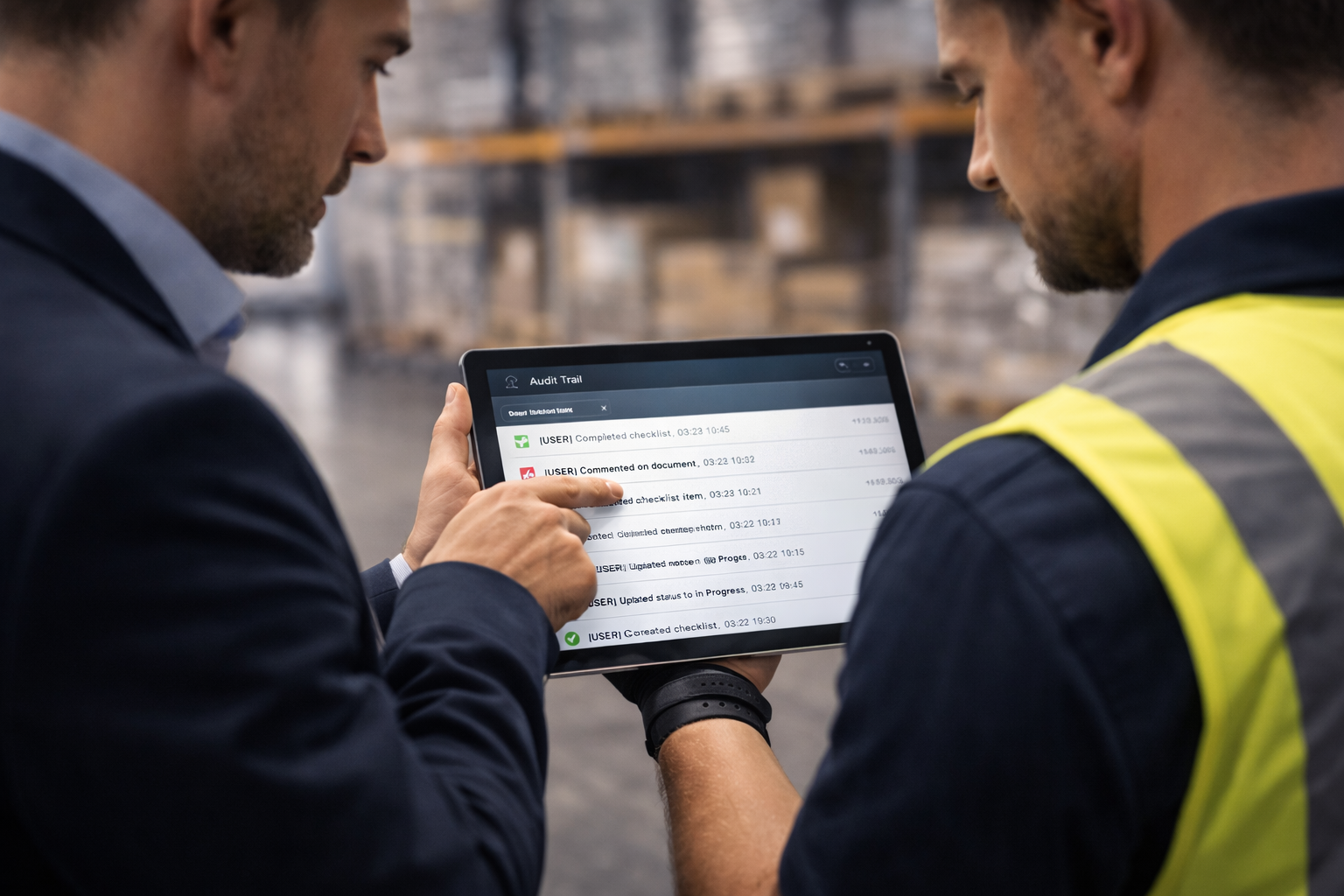
Audit trail means you can answer, without gaps: Who checked what, when, where — what was the result — and what happened next?
In logistics and HoReCa this is the difference between “we always do it” and “we can prove it”. A good audit trail is tamper-resistant, complete and context-rich (e.g., photo + note + QR checkpoint).
Not only the event matters, but the deviation chain: actions, owners, deadlines, effectiveness checks. That’s often where audits are won or lost.
- Use QR checkpoints on the object (trap/cold room/machine).
- Secure each check with photo or note (context beats ticks).
- Deviation requires action + owner + deadline.
- Version checklists: changes are audit-relevant.
- Export reports by time range, location, object and deviations.
What makes an audit trail “good” to an auditor?
Is a scanned paper list enough?
Why are photos so important?
Correction vs corrective action?
How do you prevent “fake checks”?
Minimum fields for an audit trail?
How to handle corrections in audit trails?
How does privacy relate?
Only relevant for food?
Most common failure?
What is HACCP in warehouses and food processing?
HACCP is prevention: identify hazards, control critical points, monitor limits and manage deviations — documented and verifiable.
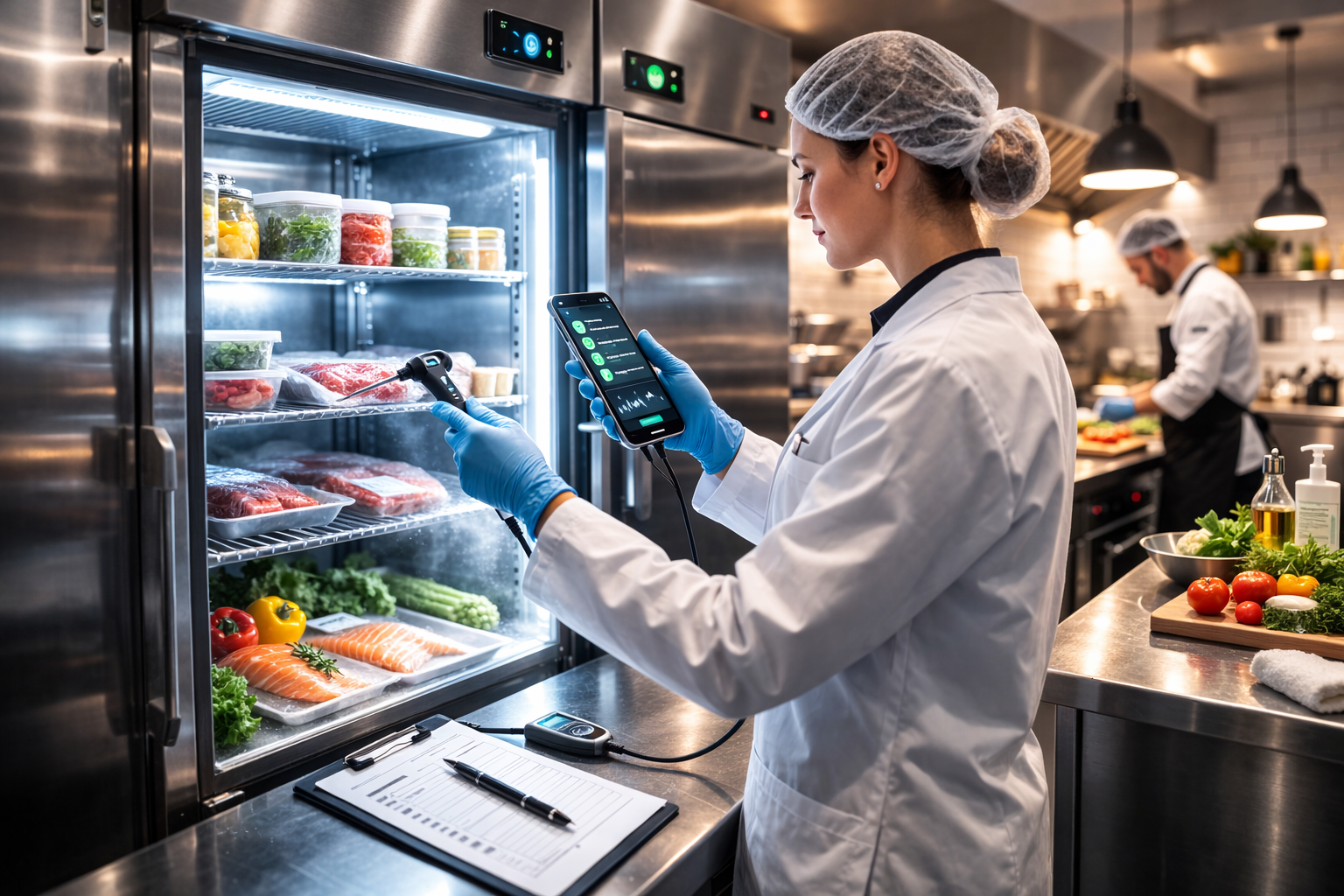
HACCP is a system for controlled food safety. In warehouses it covers receiving, cold storage, cross-contamination, pest pressure, and sanitation — treated as risks and controlled via checks.
HACCP is not “just checklists”. It’s risk management: hazard analysis → CCP/OPRP → limits → monitoring → actions → verification/validation.
In HoReCa, HACCP lives through temperature logs, cleaning plans, allergen management and pest monitoring — where documentation quality defines audit ease.
- Make CCP/OPRP explicit and capture critical limits as mandatory fields.
- Temperature checks: value + photo of display + note on deviations.
- Receiving: packaging/temp/expiry in one auditable record.
- QR trap points: findings + actions captured immediately.
- Verify via KPIs: monthly trend analysis instead of “folders”.
Is HACCP only for production?
Most common warehouse HACCP failure?
When is something a CCP?
How to prove cold chain compliance?
Why is pest monitoring HACCP-relevant?
Is “cleaned” as a tick enough?
How often measure temperatures?
What is verification day-to-day?
How does QR scanning help?
What do auditors check first?
What are control rounds in warehouses or commercial kitchens?
Control rounds are defined inspection routes across objects/areas — with clear accountability, frequency and evidence.

A control round is a planned sequence of checks (traps, cold rooms, sanitation zones, fire exits). The core is standardization: same route, same criteria, same evidence.
In warehouses, rounds protect process and hygiene discipline. In HoReCa, they prevent blind spots (cold room, dishwashing, allergen zones). Execution matters: frequency, criteria, and deviation logic.
Digitally, rounds become powerful when individual checks form a run log — with missed rounds, trends and exports.
- Define route + time window (zones, order, shift logic).
- Make criteria specific (avoid “all ok”).
- Deviations force evidence + action + owner.
- Expose missed rounds: dashboards + reminders.
- Proof first: fewer checkpoints, stronger evidence.
Are control rounds just “walking checklists”?
How many checkpoints are sensible?
How to prevent “tick-and-go”?
Which rounds are audit-critical?
Does every deviation need an action?
How to prove re-checks?
How to connect rounds to KPIs?
Can HoReCa do rounds per shift?
How do audits become easier?
Biggest lever?
How do you document in an IFS-compliant way?
IFS-style documentation is controlled, traceable, complete and risk-based — with clean deviation handling and change control.

IFS-compliant documentation means: controlled documents (version, approval, validity), strong records (object-based, timestamped, accountable) and managed deviations (actions + effectiveness).
Many IFS issues are small: missing signatures, unclear ownership, backfilled entries without context. Digitally you can enforce quality via workflow rules.
IFS is not about “lots of paper”. It’s about controlled processes. Lean and clear beats messy binders.
- Version and approve checklists/processes; only valid versions usable.
- Records must be object-based (QR) + time + owner.
- Classify deviations and enforce CAPA (cause → action → effectiveness).
- Keep calibration valid; otherwise measurements are disputable.
- Design for export: filters + evidence + action chain.
IFS-compliant documentation in one sentence?
Why do versions matter so much?
How lean can documentation be?
Which records are most audit-critical?
Typical documentation failures?
How to show effectiveness?
Training and evidence: how to link?
Does every minor need CAPA?
How does digital documentation help audits?
What convinces auditors most?
What are compliance KPIs in warehouses and gastronomy?
Compliance KPIs turn obligations into controllable performance: execution, evidence quality, response speed and effectiveness.

Compliance KPIs show whether duties are fulfilled reliably, on time and effectively. They often indicate a living management system.
Use a mix: activity KPIs (were checks done?), quality KPIs (is evidence strong?), response KPIs (how fast do we act?) and outcome KPIs (is it improving?).
Digital runs make KPIs automatic: missed runs, deviation trends, action cycle times — without spreadsheet pain.
- Start with 5 KPIs: missed runs, evidence rate, MTTR, overdue actions, repeat findings.
- Define thresholds (e.g., missed runs < 2%).
- Make hotspots visible by zones/objects — not only totals.
- Add outcomes: complaints, audit score, repeat findings.
- KPIs must drive actions — otherwise they are just numbers.